


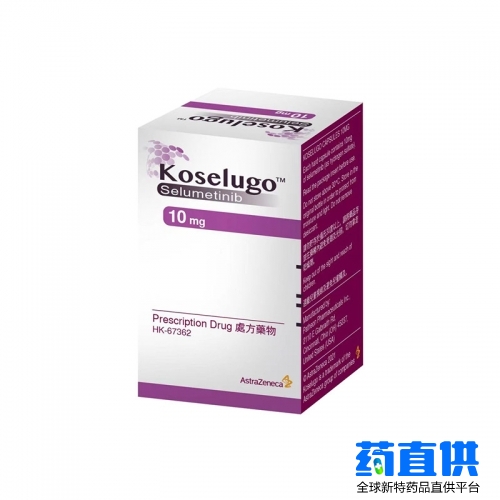
 英国阿斯利康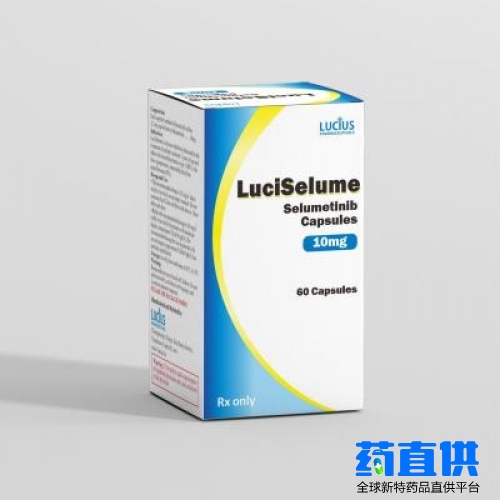
 老挝卢修斯制药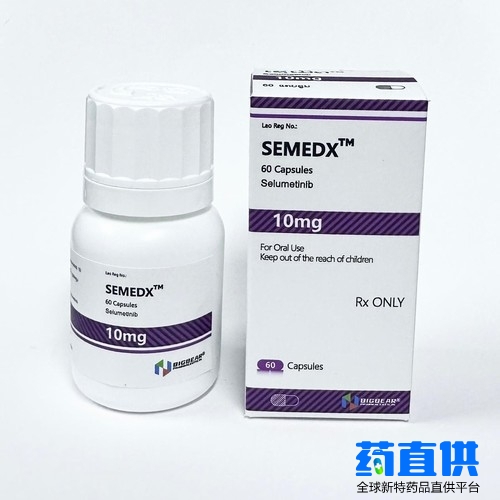
 老挝大熊制药
 Selumetinib: A Breakthrough Targeted Therapy for Cancer Treatment
Selumetinib, also known as the brand name \"Koselugo,\" is a small-molecule inhibitor that targets the MAPK signaling pathway. This targeted therapy drug has shown promising results in treating patients with certain types of cancers, such as neurofibromatosis type 1 (NF1) and metastatic uveal melanoma (MUM).
The MAPK pathway plays a crucial role in regulating cell growth, differentiation, and survival. The pathway is activated in many types of cancers, leading to uncontrolled cell growth and the formation of tumors. Selumetinib selectively inhibits the activity of MEK1 and MEK2, two protein kinases that play a key role in the MAPK pathway. By blocking MEK1 and MEK2, selumetinib decreases the growth and survival of cancer cells.
Neurofibromatosis type 1 (NF1) is a genetic disorder that affects one in every 3,000 people worldwide. NF1 is caused by a mutation in the NF1 gene, which encodes for the protein neurofibromin. Neurofibromin functions as a tumor suppressor, helping to regulate the MAPK pathway. When neurofibromin is absent or not functioning correctly, the MAPK pathway becomes activated, leading to the formation of tumors. Approximately 50% of people with NF1 develop benign tumors called plexiform neurofibromas, which can cause disfigurement, pain, and other complications. Selumetinib has been shown to shrink these tumors in clinical trials, offering hope for patients with NF1.
Metastatic uveal melanoma (MUM) is a rare form of eye cancer that affects about 2,000 people in the United States each year. MUM is notoriously difficult to treat, with few effective treatment options available. However, selumetinib has shown promise in treating MUM patients. In a phase III clinical trial, selumetinib was tested against chemotherapy in patients with advanced MUM. The study showed that selumetinib significantly improved progression-free survival (PFS) compared to chemotherapy. Patients treated with selumetinib had a PFS of 15.9 weeks, compared to 7 weeks for patients treated with chemotherapy.
Selumetinib has also been tested in combination with other cancer drugs, such as paclitaxel, in clinical trials. In a phase II trial, selumetinib and paclitaxel were tested in patients with KRAS-mutant non-small cell lung cancer (NSCLC). The study showed that the combination therapy significantly improved progression-free survival (PFS) compared to paclitaxel alone. The PFS for patients treated with selumetinib and paclitaxel was 5.3 months, compared to 2.5 months for patients treated with paclitaxel alone.
Overall, selumetinib shows great promise in the treatment of cancers that are difficult to treat with traditional chemotherapy. While not yet approved for widespread use, selumetinib offers new hope for patients with NF1 and MUM, as well as for those with other types of cancers that may benefit from targeted therapy. Further research and clinical trials will be needed to determine the full potential of selumetinib in cancer treatment.
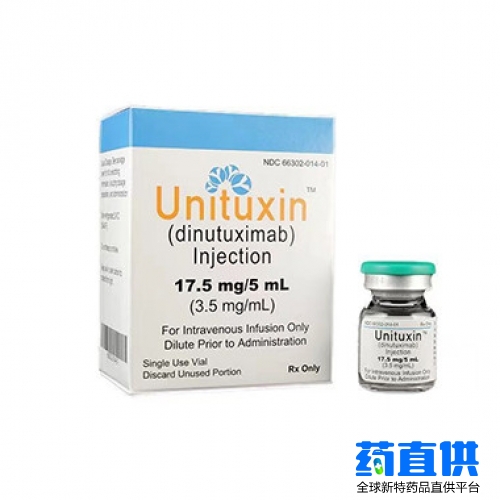
 瑞士罗氏
瑞士罗氏 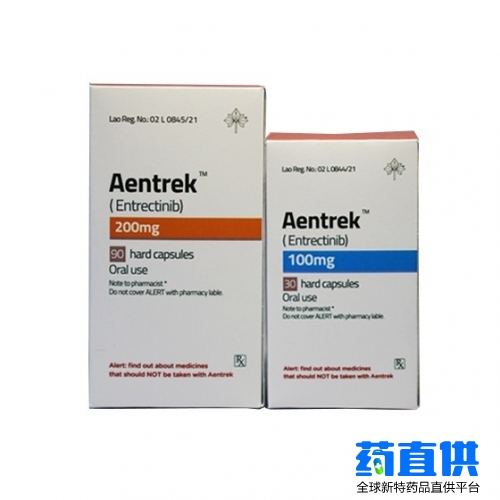
 老挝东盟制药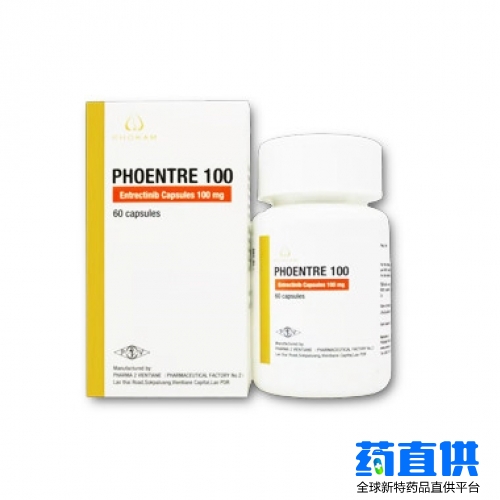
 老挝第二制药


