



 美国Horizon Pharma
 Thyroid Eye Disease (TED), also known as Graves' ophthalmopathy, is an autoimmune condition that affects the eyes of individuals with an overactive thyroid gland. Its symptoms can vary in severity but often include eye discomfort, dryness, redness, bulging, and in some cases, vision loss. These symptoms can significantly impact a person's quality of life and self-confidence. However, there is hope on the horizon in the form of a new medication called Tepezza.
Tepezza, also known by its generic name Teprotumumab-trbw, is a novel drug specifically designed to treat thyroid eye disease. It was approved by the Food and Drug Administration (FDA) in January 2020 and has rapidly gained recognition for its effectiveness in improving the symptoms associated with this debilitating condition.
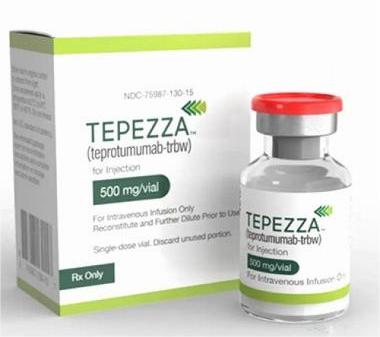
The primary mechanism of action of Tepezza involves targeting and inhibiting the insulin-like growth factor 1 receptor (IGF-1R) pathway. This pathway plays a crucial role in the inflammatory process associated with TED. By blocking IGF-1R, Tepezza reduces inflammation, prevents tissue expansion, and ultimately helps to restore the normal structure and function of the eyes.
Numerous clinical trials have been conducted to evaluate the safety and efficacy of Tepezza in treating TED. One of the most significant trials, known as the OPTIC trial, involved 88 patients with active moderate-to-severe TED. The participants were randomly assigned to receive either Tepezza or a placebo. The results were astounding, with 83% of the Tepezza-treated group experiencing a significant improvement in their symptoms compared to only 10% in the placebo group. These findings suggest that Tepezza has excellent potential as a game-changing therapy for patients suffering from TED.
The most noticeable effect of Tepezza treatment is the reduction in proptosis, or eye bulging. Patients with TED often experience the expansion of the fat and muscles behind the eyes, causing them to protrude abnormally. This physical change can not only affect a person's appearance but also lead to difficulties in closing the eyelids properly and even permanent vision loss. Tepezza has been shown to significantly decrease proptosis in patients, leading to improved eye function and appearance.
Other symptoms of TED, including eye pain, redness, and swelling, have also been observed to improve with Tepezza treatment. Additionally, Tepezza has been reported to increase tear production, alleviating dryness and providing relief to patients who previously struggled with discomfort or visual disturbance caused by dry eyes.
Although the introduction of Tepezza provides renewed hope for individuals with thyroid eye disease, it is essential to note that every patient is unique, and treatment outcomes may vary. Potential side effects of Tepezza include muscle and joint pain, nausea, fatigue, and headache. In some cases, more severe side effects like high blood sugar and changes in liver function have been reported. However, the FDA closely monitored these side effects during the clinical trials and deemed Tepezza to have an acceptable safety profile overall.
In conclusion, Tepezza represents a significant breakthrough in the treatment of thyroid eye disease. This innovative medication has demonstrated its ability to improve symptoms associated with TED, including the reduction of eye bulging, alleviation of pain and discomfort, and restoration of eye function. Despite potential side effects, the benefits of Tepezza far outweigh the risks for many patients suffering from this debilitating condition. As research continues, it is hoped that Tepezza will become more widely available and continue to transform the lives of those affected by thyroid eye disease.


